
AT A GLANCE
The circular economy concept replaces the take-make-dispose system with one that keeps products, materials, and natural resources useful for longer.
- Design comes first: products are made to last, be repaired, reused, or safely recycled.
- Materials stay in circulation: businesses recover components and raw materials instead of treating them as waste.
- Nature is part of the system: biological resources should be renewed rather than steadily depleted.
- Recycling is only one stage: reducing material use and extending product life usually come before recycling.
The answer changes by product and industry because a genuinely circular system must consider energy, transport, working conditions, and the full life cycle.
What is the circular economy concept?
The circular economy concept is an economic model that keeps products and materials in circulation for as long as possible while reducing waste and pollution. Instead of extracting resources, manufacturing goods, and sending them to landfill after use, it designs systems that preserve value through maintenance, reuse, repair, remanufacturing, and recovery.
The US Environmental Protection Agency (EPA) describes a circular economy as restorative or regenerative by design. Its definition also focuses on keeping resources at their highest possible value and eliminating waste through better materials, products, systems, and business models. The EPA page was last updated on May 5, 2026, so policy details and programmes should be checked again when you use them.
- Technical materials, such as metals, plastics, and electronics, circulate through repair, reuse, refurbishment, remanufacturing, and recycling.
- Biological materials, such as food and untreated fibres, can return safely to natural systems through composting or other managed processes.
- Business models can sell access, leasing, refills, repairs, or performance instead of requiring a new product for every use.
- Consumers help the loop by choosing durable goods, maintaining them, and returning unwanted items through credible collection schemes.
How does the circular economy differ from the linear economy?
The circular economy differs from the linear economy because it treats waste as a design failure or a recoverable resource, while the linear model usually follows a one-way path from extraction to disposal. The difference is not simply whether you recycle a product at the end, but whether the whole system was designed to prevent unnecessary extraction in the first place.
In a linear economy, a company may extract oil, make a plastic item, sell it once, and leave the disposal cost to households or local authorities. In a circular economy, the company might reduce the amount of material, offer a refill, take back the container, and reuse it many times.
The comparison is useful when you examine a product or service:
- Resource use: linear systems keep drawing on virgin materials, while circular systems reduce new inputs and retain existing materials.
- Product life: linear products are often replaced when one component fails, while circular products are designed for maintenance and repair.
- Ownership: linear sales reward volume, while circular models can earn revenue from leasing, sharing, refilling, or servicing.
- Waste: linear systems manage waste after disposal, while circular systems try to prevent it through design and recovery.
This does not mean every circular product has a lower environmental impact. A shared item that requires long-distance transport, frequent replacement, or energy-intensive cleaning may perform poorly, which is why life-cycle evidence matters. You can explore the wider business context through this guide to macro environmental factors that drive business strategy.
What are the three core principles of a circular economy?
The three core principles are to eliminate waste and pollution, keep products and materials in use, and regenerate natural systems. Together, they describe how circular economic design principles should work before, during, and after production.
How can design eliminate waste and pollution?
Design can eliminate waste and pollution by preventing harmful materials, unnecessary packaging, and hard-to-separate components before production begins. A product is more circular when it uses fewer materials, avoids toxic substances where possible, and can be taken apart without damaging valuable parts.
For example, a manufacturer could use standard fasteners instead of permanent adhesives, label different plastics clearly, or design a battery to be replaced rather than sealing it inside the device. These choices make repair and material recovery practical instead of theoretical.
How do products and materials stay in use?
Products and materials stay in use when they are maintained, shared, repaired, refurbished, remanufactured, reused, or recycled at the right point in their life. The preferred option is usually the one that preserves the product’s existing function with the least additional energy and material.
A repair normally retains more value than shredding a working appliance for its metal. Recycling still matters when an item cannot be safely or economically reused, but it should not be used as a substitute for making short-lived products durable.
How can circular systems regenerate natural systems?
Circular systems regenerate natural systems by returning safe biological nutrients to the soil, improving ecosystems, and reducing pressure on land, water, and raw materials. Regenerative agriculture, responsible forestry, composting, and habitat restoration can all support this principle when they are managed within ecological limits.
Biological materials must be kept separate from hazardous substances before they return to nature. Do not compost treated timber, chemical-contaminated material, or packaging that your local authority does not approve.
How does the circular economy work in practice?
The circular economy works in practice by mapping a product’s material journey, identifying where value is lost, and building services that keep the item or its components useful. A workable system needs design changes, collection infrastructure, customer participation, and a market for repaired or recovered goods.
- Map the life cycle: identify raw materials, manufacturing steps, transport, use, maintenance, and end-of-life routes.
- Prevent waste at source: remove unnecessary packaging, reduce production defects, and use durable or recycled inputs where suitable.
- Extend useful life: provide spare parts, repair instructions, maintenance, upgrades, and resale channels.
- Recover what remains: collect products separately, sort components, and return usable materials to manufacturing.
- Measure the result: track material use, product life, recovery rates, emissions, water use, and social impacts rather than relying on a green label.
For households, the practical sequence is simple: buy less, choose repairable goods, maintain what you own, pass items on, and use verified collection points for the remainder. Check local rules before putting batteries, electrical equipment, chemicals, or textiles in a recycling bin.
How do circular economy strategies reduce global waste?
Circular economy strategies reduce global waste by cutting the amount of material entering the system, extending product life, and recovering resources that would otherwise be discarded. They also reduce the need for new extraction, although the actual result depends on collection quality, demand, transport, energy, and the durability of the replacement product.
- Waste prevention reduces the volume created through lighter packaging, longer-lasting products, and better production efficiency.
- Reuse systems spread the manufacturing impact of a container, tool, or appliance across many uses.
- Repair and refurbishment delay replacement and preserve the labour and materials already invested in a product.
- Material recovery supplies secondary metals, glass, paper, plastics, and other inputs for new production.
- Organic recovery can return nutrients to soil and reduce the volume of food and garden waste sent to landfill.
The EPA links circular economy work with reducing toxic materials, improving recycling infrastructure, and recovering critical minerals from batteries and electronics. Never dismantle damaged lithium-ion batteries yourself, and use a local household hazardous-waste or electronics facility because fires can occur during storage, transport, or processing.
What are circular economy examples across industries?
Circular economy examples appear in everyday systems such as refill packaging, repair services, shared equipment, recycled metals, and regenerative farming. The strongest examples change how a product is designed and paid for, rather than simply adding a recycling bin after a disposable sale.
What are reuse and refill systems?
Reuse and refill systems replace single-use packaging with containers that are collected, cleaned, and returned to service. They work best when containers are standardised, collection points are convenient, cleaning uses reasonable energy and water, and customers receive clear instructions.
Examples include refill shops, returnable takeaway containers, deposit-based beverage bottles, and bulk dispensers. Their benefit depends on repeated use, so a return scheme with low participation or long collection journeys may deliver less than expected.
How do repair, remanufacturing, and product sharing work?
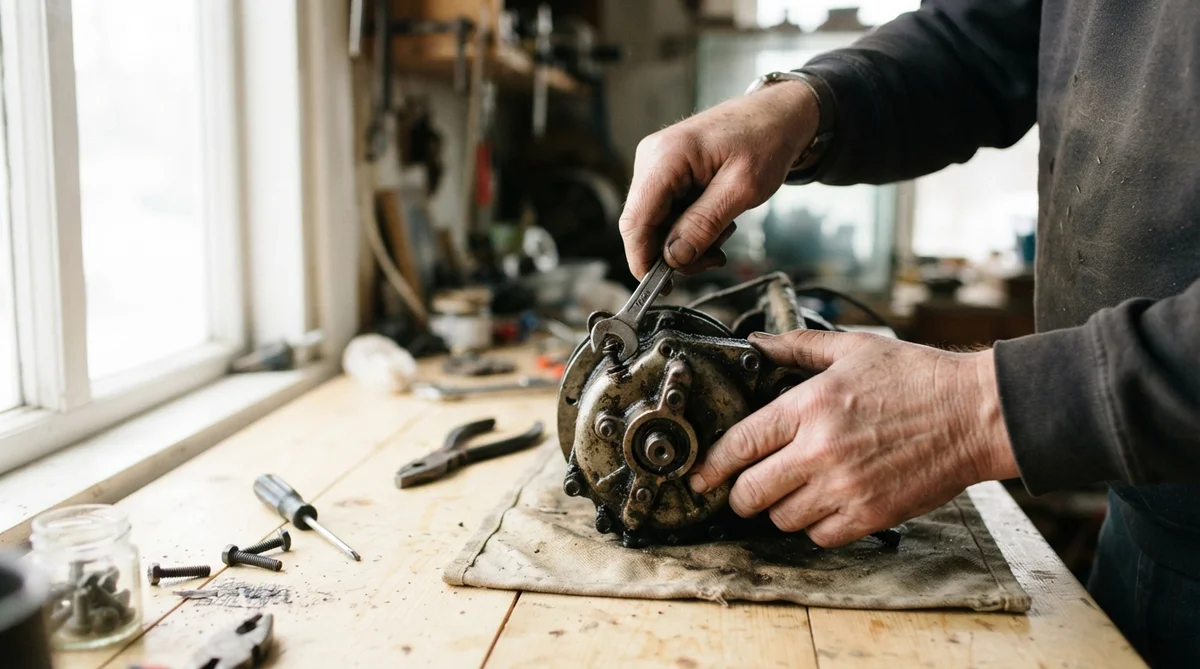
Repair fixes a product so you can keep using it, remanufacturing rebuilds a used product to a defined performance standard, and sharing lets multiple people use the same asset. These approaches are common in tools, vehicles, office equipment, appliances, and industrial machinery.
Look for replaceable parts, published repair information, local technicians, and warranties that cover service rather than only replacement. Product sharing is most effective when the item is used often enough to avoid buying several rarely used products.
How does recycling and recovery of materials help?
Recycling and recovery process discarded materials into inputs for new products, reducing the need for some virgin resources. They are useful for materials such as aluminium, steel, glass, paper, and selected plastics, but they cannot recover every material indefinitely or at the same quality.
Keep recycling streams clean by following your local authority’s instructions, emptying containers, and never placing batteries or chemicals in ordinary recycling. If a product contains several bonded materials, better design and easier disassembly may achieve more than end-of-life sorting.
What are regenerative agriculture and bio-based materials?
Regenerative agriculture aims to improve soil health, biodiversity, water retention, and long-term productivity through practices suited to local conditions. Bio-based materials use biological feedstocks, such as timber, crops, or agricultural residues, but they are not automatically sustainable.
A bio-based product can still cause land pressure, biodiversity loss, or pollution if its feedstock is poorly managed. Assess its source, processing, durability, and end-of-life route rather than treating the word bio-based as proof of a circular product.
What are the benefits and limitations of the circular economy?
The circular economy can reduce resource pressure, create repair and recovery work, improve resilience, and lower waste-related pollution. Its limits arise when circular activities consume excessive energy, rely on weak collection systems, shift impacts to another location, or make environmental claims that lack evidence.
- Environmental benefits: less extraction, lower waste volumes, reduced pollution, and better use of materials already in circulation.
- Economic benefits: new repair, leasing, resale, remanufacturing, and recovery markets, plus lower exposure to shortages in some raw materials.
- Community benefits: local repair skills, reuse organisations, and safer waste systems can support jobs and reduce exposure to polluted facilities.
- Practical limitations: reused goods may require transport and cleaning, recycled materials may be lower quality, and durable products can cost more upfront.
- Measurement risks: a company may advertise recycled content while increasing total sales, packaging, or replacement frequency.
Check environmental claims against measurable information such as recycled content, expected product life, repair access, take-back coverage, and recovery rates. Sodium Haze’s explainer on how to spot greenwashing can help you assess broad claims such as sustainable, zero waste, or fully circular.
How can businesses, governments, and consumers support the transition?
Businesses, governments, and consumers support the transition by aligning design, purchasing, infrastructure, and rules around longer product life and safer material cycles. No single group can create circularity alone because a repairable product still needs spare parts, a collection route, and customers willing to use it.
- Businesses: design for durability and disassembly, publish repair information, offer spare parts, use take-back schemes, and report material and product-life data.
- Governments: improve separate collection, set product standards, support repair and reuse infrastructure, manage hazardous waste, and use procurement rules that reward durability.
- Consumers: compare repairability and expected life, maintain products, choose second-hand or refill options, repair before replacing, and follow local recycling guidance.
- Communities: build libraries of things, repair cafés, reuse centres, composting networks, and convenient return points for electronics and packaging.
Before calling a product circular, ask four questions: what material does it avoid using, how long will it remain useful, who collects it after use, and what verified destination does it reach? Standards, collection rules, and public programmes can change, so check the relevant government or local authority information when making a purchase or planning a business policy.